
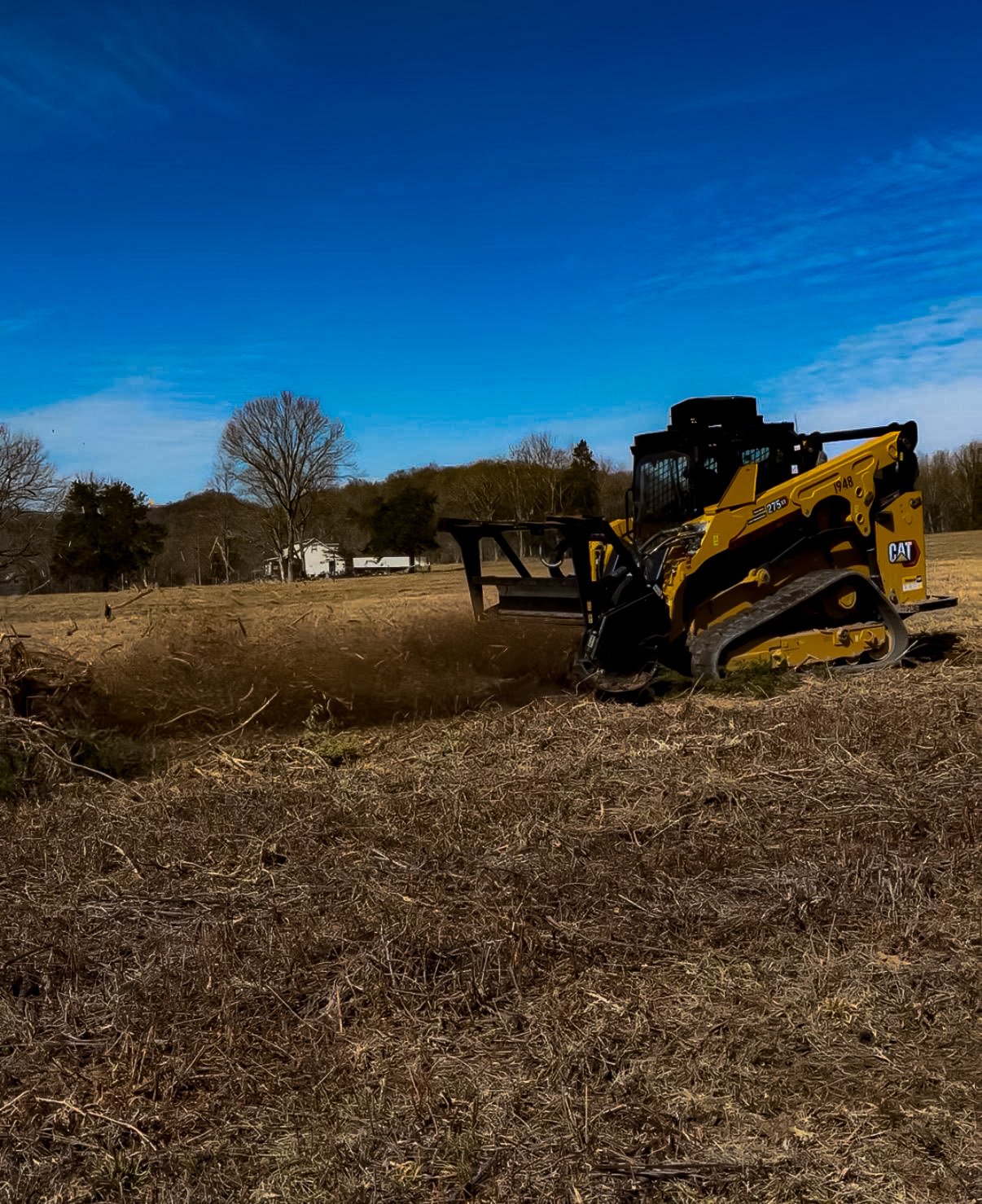
Forestry Mulching in Middle Tennessee
Clear More Land. Less Mess. Faster Results.
If you need to open up a site quickly without the hauling, burn piles, and heavy disturbance of traditional clearing, forestry mulching is often the cleanest path from overgrown to usable.
VolLand Solutions provides professional forestry mulching for developers, builders, and landowners across Murfreesboro and Middle Tennessee, delivering a build-smart finish that supports what comes next—access, layout, utilities, grading, and construction.
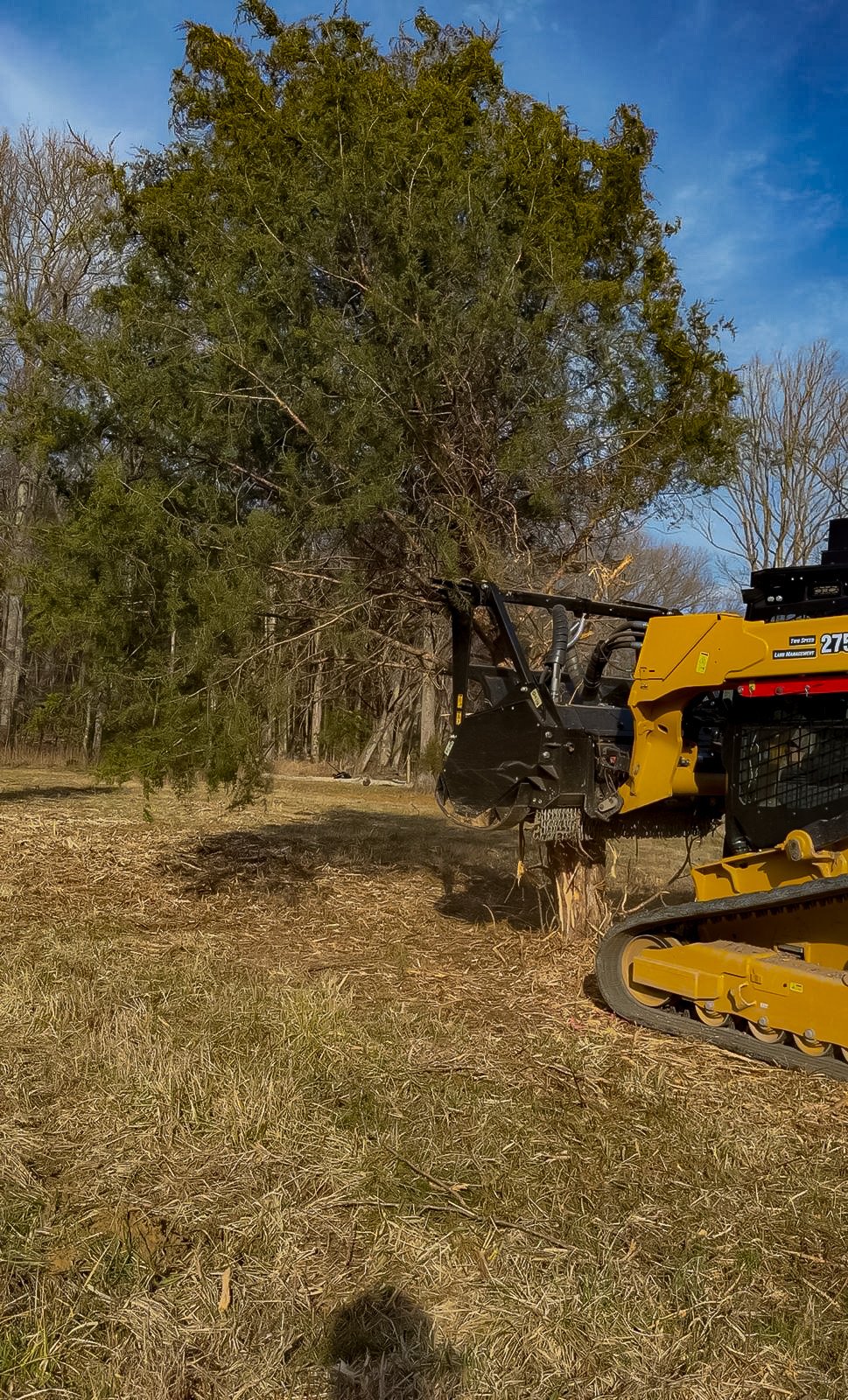
Best-Use Scenarios for Forestry Mulching services
Site Recon + Early-Phase Access
Forestry mulching is a powerful way to quickly open sightlines for survey crew access, preliminary layout and staking, soils evaluation/perc checks, & walk-throughs with stakeholders.
Trails, Roadbeds & Entry Paths
Need equipment and crews to move through a wooded tract? Mulching can cut temporary access trails, jobsite entry paths, lane widening along existing drives & staging area access.
Right-of-Way & Utility Corridor Clearing
Mulching opens corridors for future infrastructure—utilities, drainage routes, fence lines, and clearer easement boundaries.
Invasive Species & Overgrowth Control
Mulching helps reclaim neglected lots by reducing dense undergrowth and invasive vegetation before development planning begins.
What Forestry Mulching Is
Forestry mulching uses a dedicated mulching head to grind brush, undergrowth, saplings, and small trees in place, leaving behind a mulch layer instead of debris piles.
Why developers like it
Minimal haul-off (less trucking, less disposal)
Cleaner, faster “first pass” to reveal the site
Reduced soil disturbance compared to grubbing everything out
Improved access for survey, soils, layout, utilities, and equipment
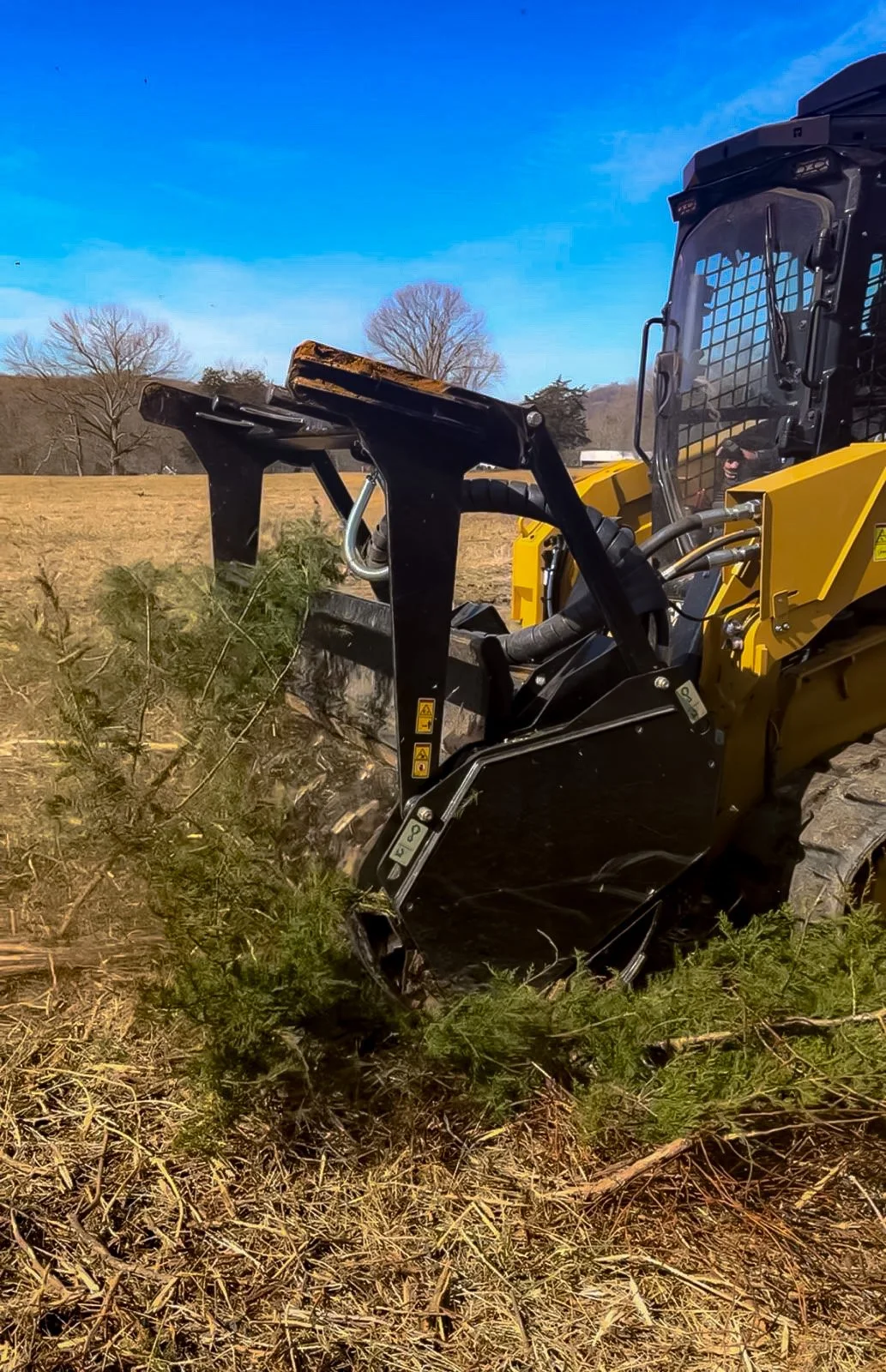
We don’t just move dirt — we build the foundation for what comes next.
What You Can Expect on a Mulching Project
1) Scope, Access, and Site Walk
We’ll evaluate:
vegetation density and type
property access and maneuvering space
slope, wet areas, and sensitive zones
what must stay vs. what must go
next-phase needs (grading, trenching, pad prep)
2) A Clear Plan (So the Next Phase Goes Smoothly)
We align the mulching approach with your next steps:
preserve key trees and buffers
open corridors where utilities will run
create clear lines for layout + staking
leave a finish that supports equipment access
3) Execution With Safety and Precision
We operate with a safety-first mindset and a clean jobsite approach:
controlled clearing boundaries
careful attention around utilities and sensitive zones
consistent communication and updates
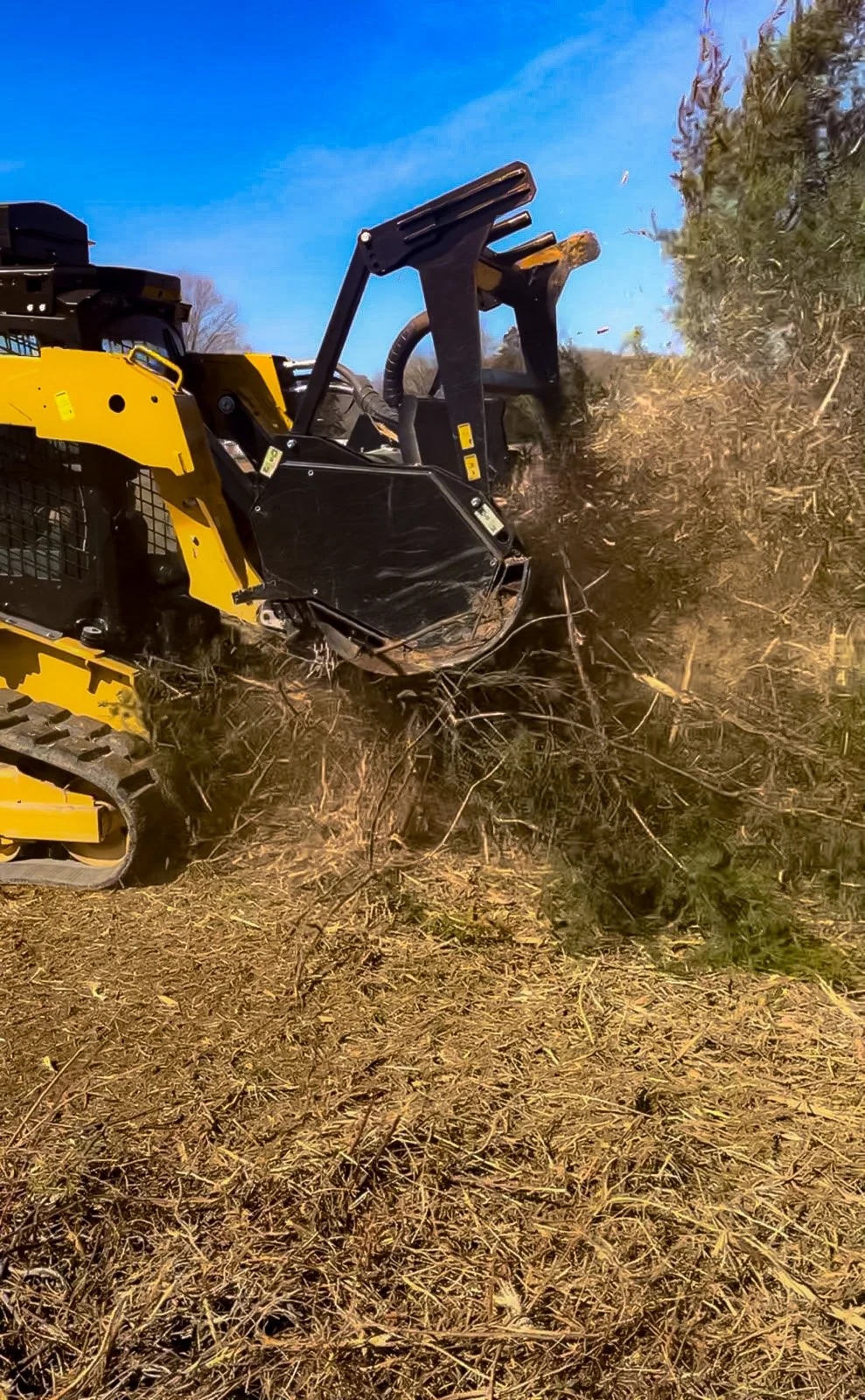
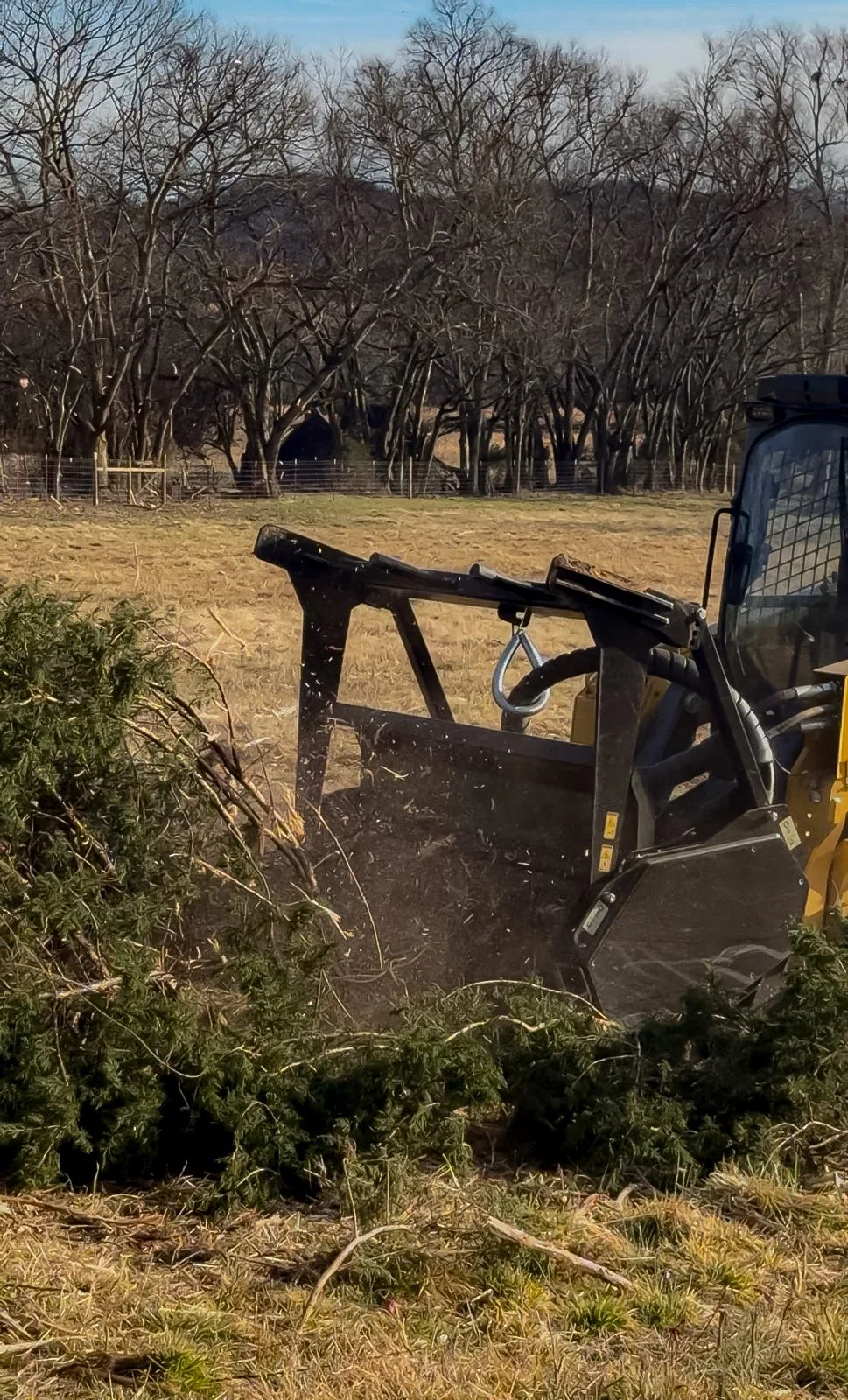
Mulch the Mess. Make Room for Progress.
Forestry Mulching vs. Traditional Land Clearing
When mulching is a strong fit
Mulching is often ideal when you want to:
reduce overgrowth and reclaim land
cut trails and create access quickly
reduce cleanup and haul-off costs
keep disturbance lower in early phases
When you may need traditional clearing or excavation instead
If the site requires:
full grubbing and root removal
major grading, pad prep, or structural excavation
heavy debris removal for immediate construction
…then full clearing and earthwork may be the better match.
Good strategy for many developments: use forestry mulching as the first phase to open the site, then follow with land clearing / excavation / grading where required.
From Overgrown to Open — Fast.
Developer-Important Considerations
Soil Disturbance and Erosion Control
Mulching can help reduce disturbance compared to aggressive grubbing, and the mulch layer may help with:
surface stabilization in certain areas
reducing immediate bare-soil exposure
improving access without tearing up the site
(Final stormwater/erosion requirements vary by site and jurisdiction—always align with your SWPPP/permit plan.)
Site Visibility for Planning and Budgeting
A clean mulch pass can make it easier to:
confirm contours and drainage patterns
identify rock, debris, and problem zones
refine grading and utility budgets
spot access constraints earlier
Schedule and Sequencing
Developers use mulching to compress early timelines by enabling:
faster survey access
quicker site walkthroughs
earlier decision-making on layout + scope
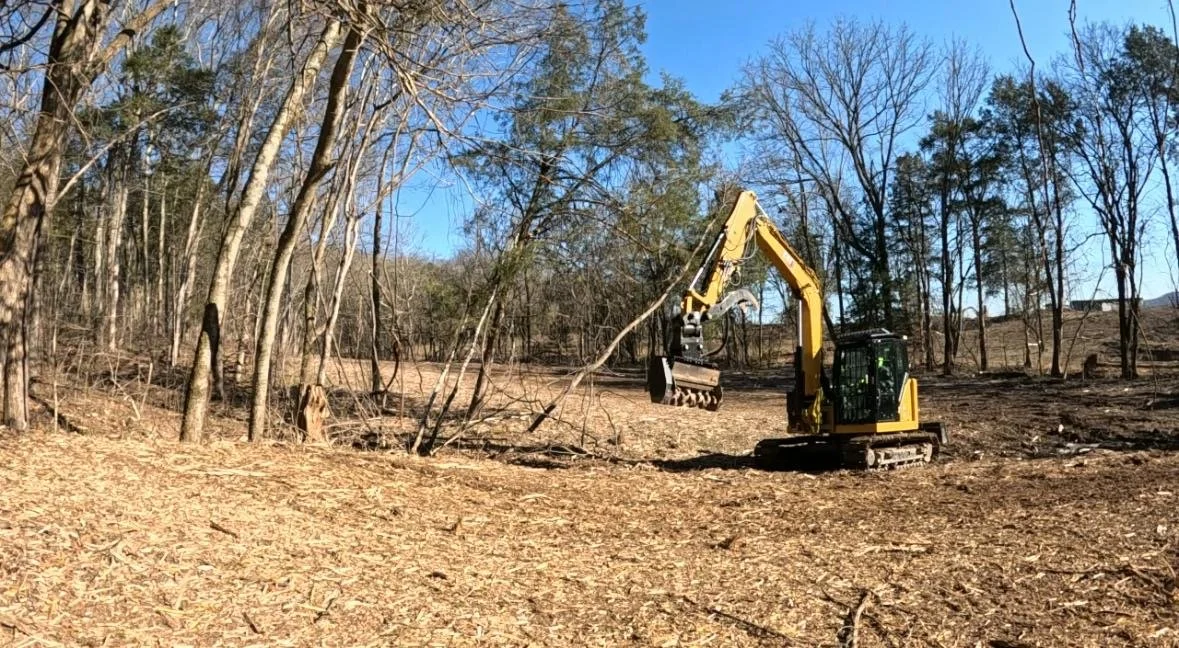
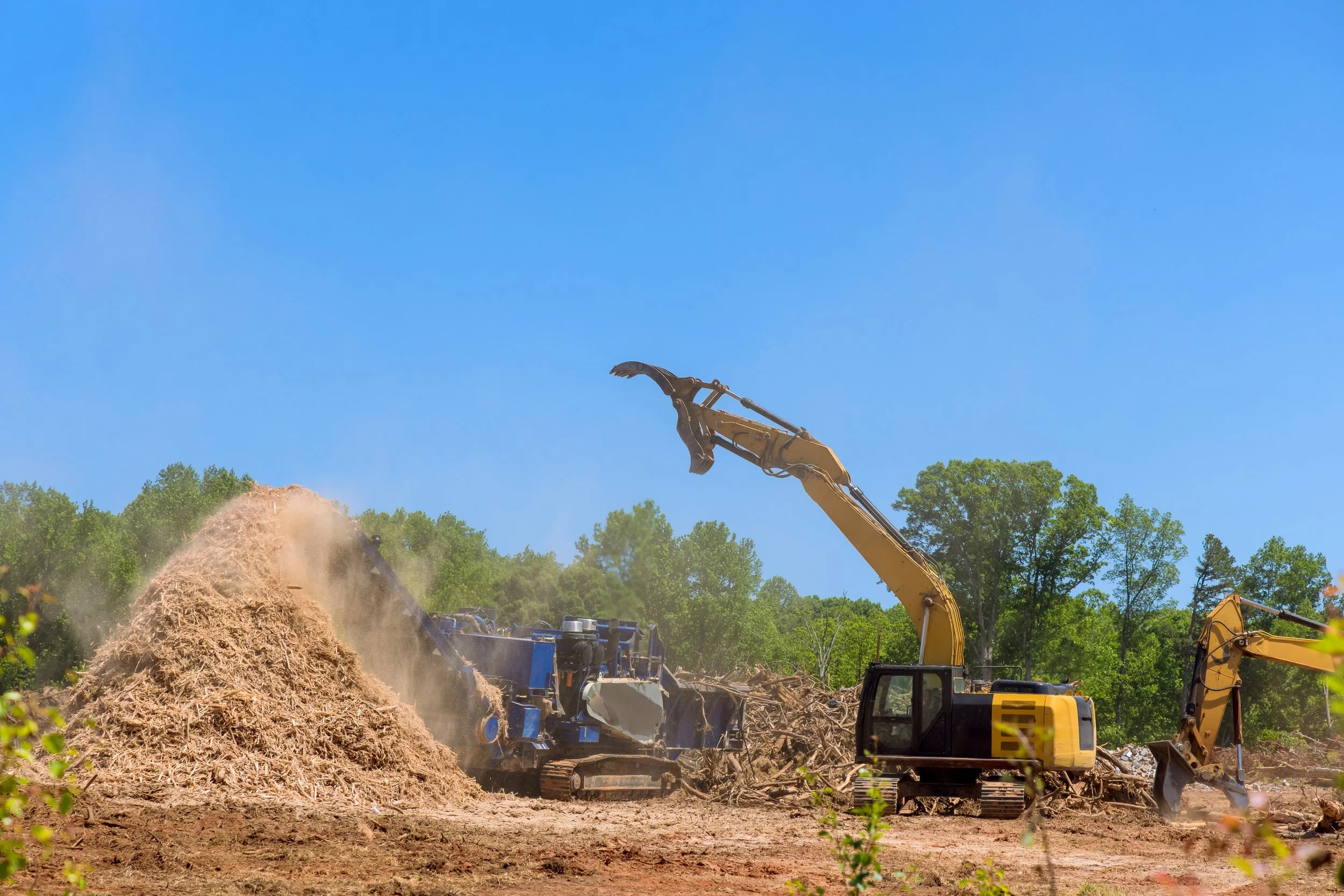
Turn Brush Into Build-Ready.
Typical Deliverables (What We Can Mulch For)
Depending on the tract and goal, forestry mulching is commonly used for:
overgrowth reduction and lot reclamation
trail cutting and access paths
boundary/fence-line clearing
selective clearing around planned build zones
corridor prep for future utilities/drainage
clearing around ponds, ditches, and swales (site-dependent)
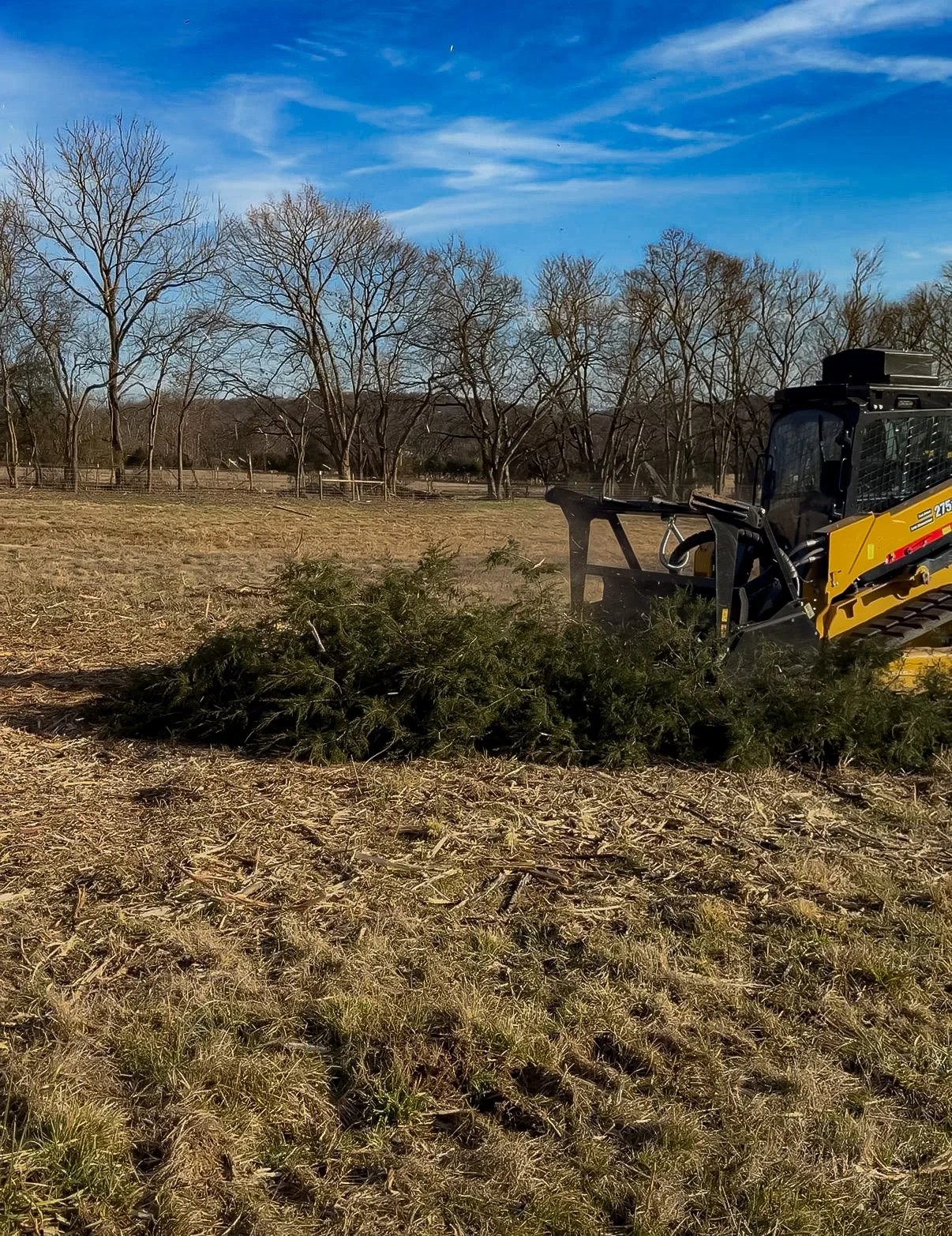
Forestry Mulching FAQ
-
Forestry mulching is commonly used for land clearing, brush removal, trail cutting, overgrowth control, right-of-way clearing, and early-phase site access—especially when a cleaner, faster approach with less hauling is preferred.
-
It can be, especially when traditional clearing would require extensive hauling, burning, or disposal. Cost depends on density, vegetation size, terrain, access, and desired finish.
-
Mulching typically grinds vegetation and surface material in place. Full stump removal is a different scope and may require excavation depending on build requirements.
-
Mulching is often a great first step for access and vegetation management, but most construction sites still need grading, excavation, and compaction for pads, roads, or foundations.
-
Timelines vary by acreage, density, and access. A lightly overgrown tract may move quickly, while dense growth, steep slopes, or limited access can slow production. We’ll estimate timeline after a site review.
-
Leaving mulch on the ground can help with soil protection and reduce bare exposed areas compared to aggressive clearing, but erosion control needs vary by site and project.
-
Yes. We can do selective clearing to preserve buffers, specimen trees, or designated areas, as long as boundaries and protections are clearly identified.
-
Best case: property address + a few photos + what you’re building toward (access, feasibility, site prep). For bigger scopes, a site walk is ideal.
-
Yes. We regularly support developers/builders needing efficient vegetation management, access creation, and clean jobsite sequencing for what comes next.